
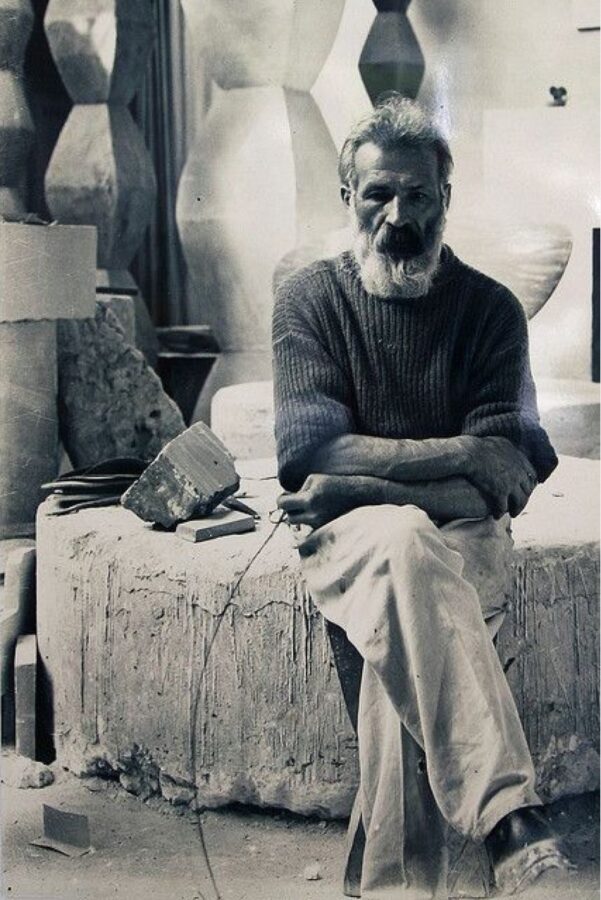
Constantin Brâncuși (1876-1957) egyik reggel arra ébredt, hogy nagy fák árnyékában aligha lehet növekedni, és ez volt az a pont, amikor is hátat fordítva a Rodin mellett töltött tanulóéveknek, először nézett igazán magába. Fel sem tudjuk fogni, mekkora bátorság, elszántság kell ahhoz, hogy elhagyja a korábbi évszázadok, a görög szobrászatban gyökerező ideáit.
Ott kellett térképet rajzolnia maga elé, ahol még soha senki nem járt előtte. Olyan lehet ez, mint mikor kiolvastad a Védákat, az összes szutrát kívülről ismered, de mégis azt érzed, mindez kevés önmagad felismeréséhez. Ahhoz a saját szívedbe írt szent szövegeket kell kimásolnod magadból, majd megvalósítanod, amit soha senki nem fog megtenni helyetted.
Brâncuși határozottan és egyértelműen az ismert, világi térképet elhagyva elindult visszafelé, a létező világ egyszerűsödése felé, lépéseivel lecsiszolta az évezredek alatt egyre bonyolultabbá vált emberi létet. Addig-addig redukálta a formát, hogy annak még éppen felismerhető legyen egyedi jellege, de ahol már inkább hasonlított ahhoz az „ősanyaghoz”, amiből e jelenségvilágot formálták.
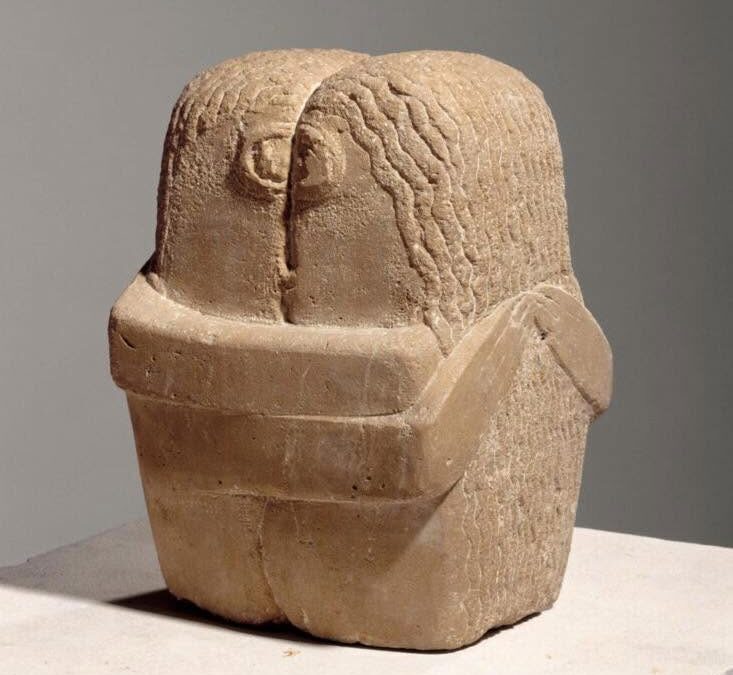
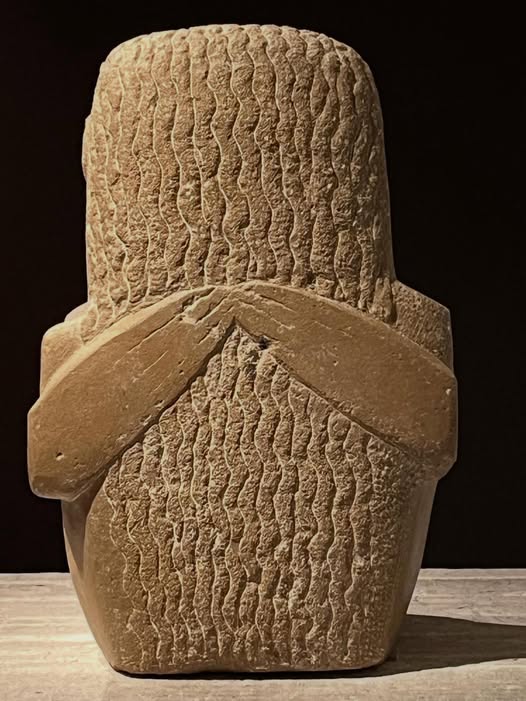
Eljött számára az a pont, amikor Rodin, Michelangelo műveit nézve csak annyit érzett, a túl tökéletes forma nem más, mint hús, ami elfedi a dolgok lényegét. Így mikor a Rodin Csókja helyett a saját, angrogünné vált, egy kőtömbből kifaragott Csókját megalkotta, visszavitte a szerelmet annak születéséig.
A Brâncuși-szobor egyidős a semmi első mozdulásával, a tudatosság moccánásával, mely e mozdulat által önmagára ismerve kimondta, vagyok, és mely ténybe hatalmas, szerelmes csókot nyomott.
Brâncuși csókja annak a lehetetlennek a kifejezése a művészet által, amikor a világlélek először a semmiből kilélegzett. Ez az a sóhaj, melynek nem volt előzménye, melyet nem előzött meg belélegzés. És mely sóhajban a semmi valamiként ismert magára, és abba beleszeretett.
Ez az önmagára ismerés egyidős a szerelem születésével, ez emberi létünk egyetlen egy szerencséje, hogy e pillanat elérhető e zűrös, zajos, mocskos, a szerelemből moslékos vájút gyártott világban is.
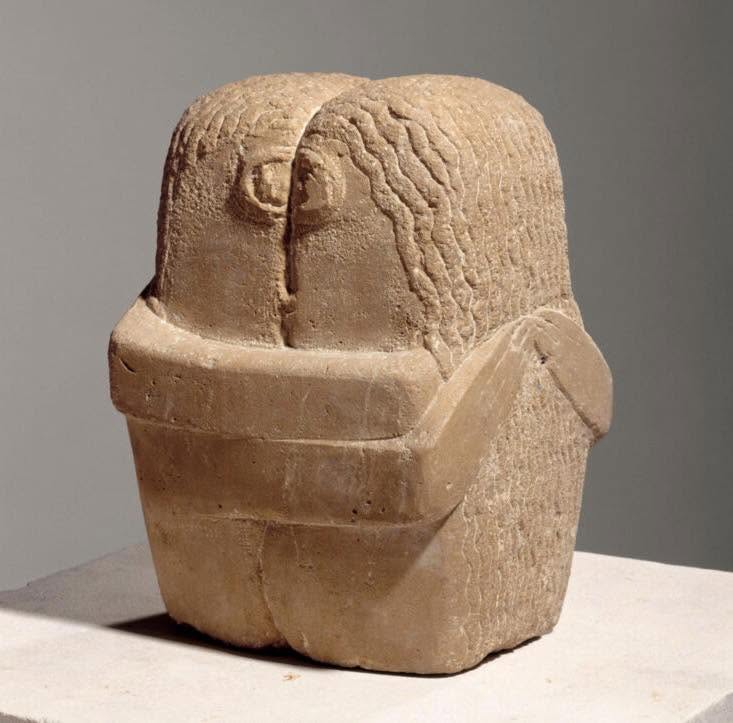
Brâncuși nem kevesebbet adott nekünk ezzel a szoborral – mert látnok volt – mert el merte hagyni az ismert tanítást, hogy a saját szívébe leheltet meghallja és megvalósítsa, minthogy a szerelmet eredeti formájában adta vissza nekünk.
Csak fényképről ismerem a szobrot, de így is érzem a benne szunnyadó erőteret, ami egyidős a szerelem felbukkanásával az anyagban.
Ha épp nagyon elfáradtunk abban, mivé tette az emberiség egyetlen és legnagyobb kincsét, a szerelmet, hogy gyártott belőle szimpla, jövő-menő emberi érzelmet, mocskolta be a tudomány hormonok kiváltotta képzetével és festette be lilára, járuljunk Brâncuși csókja elé.
Lépjünk be a szobor erőterébe, mint szentélybe
(angol ai-fordítás)
Constantin Brâncuși (1876–1957) once woke one morning to the realization that it is almost impossible to grow beneath the shadow of great trees. And that was the moment when, turning his back on his years of apprenticeship beside Rodin, he truly looked within himself for the first time.
We can scarcely imagine the courage and determination it must have taken to leave behind the ideals of the preceding centuries, ideals rooted in the great tradition of Greek sculpture.
He had to draw a map before himself of a territory where no one had ever gone before.
Perhaps it is like having read the Vedas, having learned every sutra by heart, and yet still feeling that none of it is enough to recognize yourself. For that, you must somehow copy out from within yourself the sacred texts written into your own heart—and then bring into being what no one else in the world will ever do for you.
Brâncuși left the familiar, worldly map behind with extraordinary clarity and resolve, and began to move backwards—towards the simplification of the world that exists. With every step, he seemed to sand away the increasingly complicated layers of human existence accumulated over millennia.
He reduced form again and again, until its individual character was still just recognizable, yet it had already begun to resemble more closely that primordial substance from which this phenomenal world was once shaped.
There came a point when, looking at the works of Rodin or Michelangelo, he could feel only this: that a form made too perfect is nothing but flesh concealing the essence of things.
And so, when he created his own The Kiss—instead of Rodin’s—his androgynous lovers carved from a single block of stone, he carried love back to the moment of its birth.
A Brâncuși sculpture is as old as the first movement of nothingness, as the first stirring of consciousness which, through that movement, recognized itself and uttered: I am.
And upon that fact, it pressed a vast and passionate kiss.
Brâncuși’s Kiss is the expression, through art, of that impossibility: the moment when the soul of the world first exhaled itself out of nothingness.
It is a sigh that had no beginning, one that was never preceded by an inhalation.
And within that sigh, nothingness recognized itself as something—and fell in love with what it had become.
This recognition of oneself is as old as the birth of love itself.
And perhaps this is the one great stroke of fortune granted to our human existence: that even in this confused, noisy, filthy world—which has turned love into a trough of slop—we can still reach that moment.
Brâncuși gave us nothing less through this sculpture.
Because he was a visionary.
Because he dared to leave behind what he had been taught, in order to hear what had been breathed into his own heart—and to bring it into form.
And in doing so, he gave love back to us in its original shape.
I know this sculpture only from photographs, yet even so, I can feel the field of force sleeping within it—a force as old as the first appearance of love in matter.
And if we have grown weary of what humanity has done to its one greatest treasure—love; if we are tired of seeing it reduced to a passing human emotion, soiled by the idea that it is merely an illusion produced by hormones, painted purple and made into something decorative—
then let us go and stand before Brâncuși’s Kiss.
Let us step into the field of force of that sculpture
as one steps into a sanctuary.